| Driver’s License? | Bicycle? | |
| Student 1 | Yes | Yes |
| Student 2 | Yes | No |
| Student 3 | No | Yes |
| Student 4 | No | Yes |
| Student 5 | Yes | No |
| Student 6 | No | No |
| Student 7 | No | Yes |
| Student 8 | Yes | Yes |
| Student 9 | Yes | No |
| Student 10 | Yes | Yes |
| Student 11 | No | Yes |
| Yes, has a driver’s license | No, does not have a driver’s license | |
| Yes, owns a bicycle | ||
| No, does not own a bicycle |
| Republicans | Democrats | Independents | |
| Yes | 46 | 46 | 2 |
| No | 1 | 0 | 0 |
| Not Voting | 3 | 2 | 0 |
| Republicans | Other | |
| Yes | ||
| Other |
| 20–29 years | 30–39 years | 40–49 years | 50–59 years | 60–69 years | 70–79 years | 80–89 years | |
| 0–1 days per week | 7 | 12 | 55 | 40 | 30 | 4 | 9 |
| 2–4 days per week | 35 | 41 | 45 | 50 | 55 | 30 | 12 |
| 5–7 days per week | 31 | 44 | 49 | 40 | 24 | 12 | 1 |
| 20–49 years | 50–89 years | |
| 0–1 days per week | ||
| 2+ days per week |
| 20–29 and 70–89 years | 30–69 years | |
| 0–1 days per week | ||
| 2+ days per week |
| Least concern | Near threatened | Vulnerable | Endangered | Critically endangered | |
| Plants in forest, subarctic | 33 | 15 | 3 | 3 | 1 |
| Plants in grassland, subarctic | 27 | 10 | 4 | 1 | 0 |
| Least concern | Near threatened | Vulnerable | Endangered | Critically endangered | |
| Plants in forest, subarctic | 34.0 | 14.2 | 4.0 | 2.3 | 0.57 |
| Plants in grassland, subarctic | 26.0 | 10.8 | 3.0 | 1.7 | 0.43 |
| Least concern | Near threatened | Threatened | |
| Plants in forest, subarctic | 33 | 15 | 7 |
| Plants in grassland, subarctic | 27 | 10 | 5 |
| Least concern | Near threatened | Vulnerable | Endangered | Critically endangered | |
| Plants in forest, subantarctic | 20 | 10 | 2 | 1 | 0 |
| Plants in grassland, subantarctic | 12 | 7 | 2 | 1 | 0 |
| Least concern | Near threatened | Threatened | |
| Plants in forest, subantarctic | 20 | 10 | 3 |
| Plants in grassland, subantarctic | 12 | 7 | 3 |
| Least concern | Threatened levels | |
| Plants in forest, subantarctic | ||
| Plants in grassland, subantarctic |
| Medication – 100mL | Medication – 200mL | No medication | |
| Yes, cough has subsided | 5 | 7 | 2 |
| No, cough has not subsided | 3 | 2 | 9 |
| Medication | No medication | |
| Yes, cough has subsided | ||
| No, cough has not subsided |
| 35–44 | 45–54 | 55–64 | 65–74 | 75–84 | |
| Has an annual physical | 4 | 7 | 10 | 15 | 20 |
| Does not have an annual physical | 11 | 13 | 8 | 6 | 2 |
| 35–64 | 65–84 | |
| Has an annual physical | ||
| Does not have an annual physical |
| Black helmet | White helmet | Red helmet | Yellow/orange helmet | |
| No injury | 8 | 4 | 3 | 2 |
| Injured or killed | 20 | 2 | 1 | 1 |
| Black helmet | White helmet | Red helmet | Yellow/orange helmet | |
| No injury | ||||
| Injured or killed |
| Black helmet | Other helmet color | |
| No injury | 8 | |
| Injured or killed | 20 |
| Black helmet | Other helmet color | |
| No injury | ||
| Injured or killed |
| Black helmet | White helmet | Red helmet | Yellow/orange helmet | |
| No injury | 8 | 4 | 3 | 2 |
| Injured or killed | 20 | 2 | 1 | 1 |
| Red helmet | Other helmet color | |
| No injury | 3 | |
| Injured or killed | 1 |
| Red helmet | Other helmet | |
| No injury | ||
| Injured or killed |
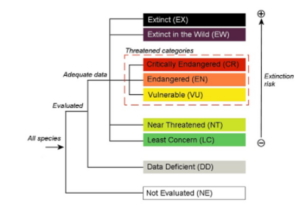
| A species, family, or class is… | |
| Least Concern (LC) |
Widespread and doesn’t qualify for another category. |
| Near Threatened (NT) | Close to qualifying for a threatened category in the near future. |
| Vulnerable (VU) | Considered to be facing a high risk of extinction in the wild and meets a set of criteria. |
| Endangered (EN) | Considered to be facing a very high risk of extinction in the wild and meets a set of criteria. |
| Critically Endangered (CR) | Considered to be facing an extremely high risk of extinction in the wild and meets a set of criteria. |
| Skill or Concept: I can . . . | Questions to check your understanding | Rating from 1 to 5 |
| Identify when the test for independence should not be used. | 1, 2, 4 | |
| Be able to combine categories of a contingency table. | 3, 7 | |
| Use the chi-square test for independence after combining categories in a contingency table. | 4, 5, 6 | |
| Identify when to use Fisher’s Exact Test. | 8 |
| Variable Name | Description |
| Age | Age in years at screening of participant |
| AttendCollege | Did the participant attend college? (Yes, No) |
| BadPhysHlthDay | Did the participant report any number of days when their physical health was not good during the past 30 days? (Yes, at least 1 day; No, 0 days) |
| BadMentHlthDay | Did the participant report any number of days when their mental health was not good during the past 30 days? (Yes, at least 1 day; No, 0 days) |
| BMI | Body mass index (kg/m2) |
| SleepTrouble | Participant has told a doctor or other health professional that they have trouble sleeping (Yes, No) |
| SleepHrsNight | Number of hours of sleep the participant reported they usually get at night on weekdays or workdays |
| TotChol | Total HDL cholesterol in mmol/L |
| BPSysAve | Average of three systolic blood pressure readings in mmHg |
| HealthGen | Self-reported rating of participant’s health in general (Excellent, Vgood, Good, Fair, Poor) |
| PhysActive | Whether the participant does moderate or vigorous sports, fitness, or recreational activities (Yes, No) |

Glossary 15E
- Fisher’s Exact Test
- a test that can be done on a 2×2 contingency table when the expected frequencies do not meet the conditions for the chi-square test, requiring a simple random sample from the population and two categorical variables, each with two possible values.