| Major | Major_category | Median_salary |
| ACCOUNTING | Business | 45000 |
| ACTUARIAL SCIENCE | Business | 62000 |
| FINANCE | Business | 47000 |
| GENERAL BUSINESS | Business | 40000 |
| HOSPITALITY MANAGEMENT | Business | 33000 |
| MARKETING AND MARKETING RESEARCH | Business | 38000 |
| MISCELLANEOUS BUSINESS AND MEDICAL ADMINISTRATION | Business | 40000 |
| OPERATIONS LOGISTICS AND E-COMMERCE | Business | 50000 |
| AEROSPACE ENGINEERING | Engineering | 60000 |
| Skill or Concept: I can . . . | Questions to check your understanding | Rating from 1 to 5 |
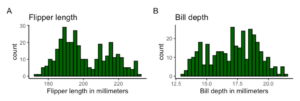
| Use technology to create a histogram or dotplot. | 1, 4 | |
| Compare centers of distributions of a quantitative variable. | 2 | |
| Compare spread in distributions of a quantitative variable. | 3, 6 | |
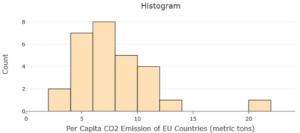
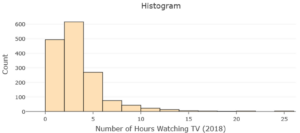
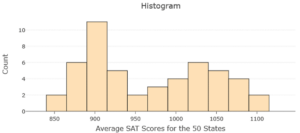
| Describe the shape of the distribution of a quantitative variable. | 1, 4 | |
| Determine the presence of outliers in the distribution of a quantitative variable. | 5 |

Glossary
- observational units
- individuals or items whose characteristics we are interested in.
- variables
- the characteristics we record on the observational units. These may be quantitative or categorical variables.