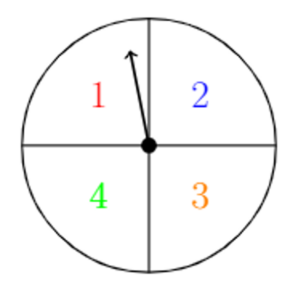

| Experimental Outcome | , Number of Tails in 3 Flips of a Coin |
| HHH | 0 |
| HHT | 1 |
| HTH | 1 |
| THH | 1 |
| TTH | 2 |
| THT | 2 |
| HTT | 2 |
| TTT | 3 |
| Number of Tails, | Ways to Obtain Tails | Number of Ways to Obtain Tails in 3 Flips |
| 0 | HHH | 1 |
| 1 | THH, HTH, HHT | 3 |
| 2 | ||
| 3 |
| 0 | |
| 1 | |
| 2 | |
| 3 |
| Skill or Concept: I can . . . | Questions to check your understanding | Rating from 1 to 5 |
| Identify whether a chance experiment is a binomial experiment. | 1 | |
| Determine the probability distribution for binomial experiments where is small. | 2, 3 | |
| Understand the basic principles behind the formula for the binomial probability model. | 2–4 |
| Country | Cost of Big Mac |
| Argentina | $3.75 |
| Australia | $4.98 |
| South Korea | $4.10 |
| Egypt | $2.72 |
| Mexico | $2.68 |
| United States | $5.66 |
| Country | Cost of Big Mac | Right or Left of the Mean | Cost Higher or Lower Than Average |
| Argentina | $3.75 | right | higher |
| Australia | $4.98 | ||
| South Korea | $4.10 | ||
| Egypt | $2.72 | ||
| Mexico | $2.68 |
| Skill or Concept: I can . . . | Questions to check your understanding | Rating from 1 to 5 |
| Understand the properties of continuous distributions. | 1, 2 | |
| Identify continuous distributions from graphical displays. | 3 | |
| Identify normal distributions from graphical displays. | 5 | |
| Create the graph of a normal distribution with a given mean and standard deviation. | 6, 7, 10 | |
| Identify the mean and standard deviation by looking at a labeled normal curve. | 4, 8 | |
| Estimate probabilities using a normal distribution. | 2, 9 |
- acceptance sampling
- sampling where a random sample is drawn from each lot of a product, the items in the sample are tested, and if the number of nonconforming items is above a pre-determined threshold, then the whole lot of the product is rejected.
- sensitivity
- the probability that a person with the condition is correctly identified as having it.
- specificity
- the probability that a person without the condition is correctly identified as not having it.
- Bernoulli trial
- a chance experiment with exactly two possible outcomes, the same probability of success for every trial, and trials that are independent from one another.
- binomial experiment
- an experiment consisting of a fixed number, 𝑛, of independent Bernoulli trials that counts the number of successes out of 𝑛 trials.